
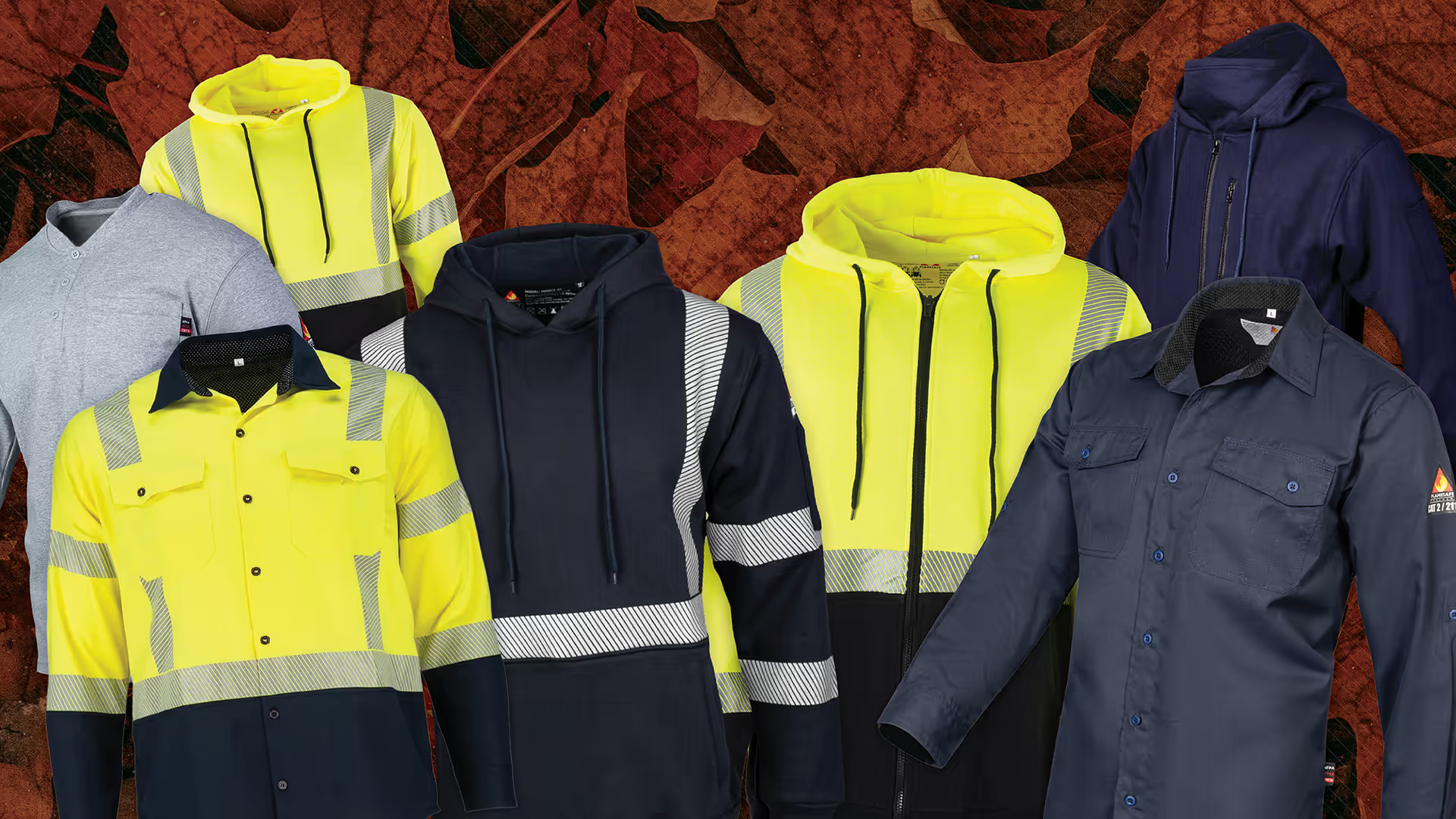
Every fall, the same pattern plays out on job sites: mornings turn cool, nobody wants to be the first to admit they need another layer, then the cold arrives properly and crews start digging through lockers for something warm. For ordinary clothing, that's a minor inconvenience. For flame-resistant workwear, it's a bigger problem - a worker exposed to flash fire or arc flash hazards can't just grab whatever fleece is closest to hand. What goes under, over, or instead of an FR shirt matters as much as the shirt itself.
Fall is the window to sort this out - not November, once the cold has already hit and everyone's scrambling. This is where Flamesafe Workwear's range of FR shirts and hoodies earns a closer look, not as a seasonal add-on, but as part of how a proper cold-weather FR layering system gets built.
Why cold weather adds a variable
The instinctive fix for cold weather is simple: add a layer. That logic works fine for weekend wear. On a site where flash fire or arc flash risk is present, every layer a worker adds becomes part of their protective system, whether it was chosen with that in mind or not.
A non-FR fleece under an FR shirt, or a synthetic hoodie thrown over the top, can undermine the protection the rest of the outfit was designed to provide - even though the worker still looks compliant from a distance. That doesn't mean every non-FR layer is automatically unsafe everywhere; it depends on the hazards present and what standards apply to that role. But it does mean cold weather introduces a variable a lot of crews don't think through until an audit or an incident asks the question for them.
FR shirts: Still the foundation
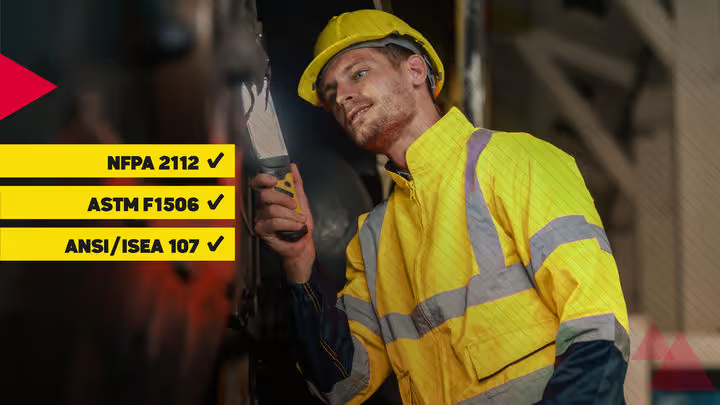
An FR shirt is usually the base of the whole system - it’s the layer that stays constant while everything else changes with the weather. Flamesafe's Henley Shirt Cotton range uses 6.5oz FR cotton interlock, substantial enough to sit comfortably under a hoodie once conditions turn. For a collared option, the Button Down Shirt Navy FR Lenzing Aramid uses a lighter 5.8oz FR Lenzing® Aramid Antistatic fabric with roll-up sleeves, built for comfort across a full shift. Where visibility matters as much as flame resistance, the Hi-Vis 2-Tone Long Sleeve Shirt carries NFPA 2112 and NFPA 70E certification - increasingly relevant as daylight hours shrink.
The point for customers isn't "buy a new shirt for winter." It's that the shirt someone already wears sets the foundation for everything added on top of it once temperatures drop.
FR hoodies: Closing the real gap
This is where the biggest compliance gap tends to open. When it's cold, the instinctive move is reaching for a regular hoodie - warm, familiar, and exactly the kind of layer that can undo the protection built into the rest of an FR outfit. An FR hoodie removes the reason workers go looking for that alternative in the first place.
Flamesafe's hoodie range is built around real design choices, not one generic product. The Navy Pullover and Front-Zip Hoodie use 13.5oz FR cotton/spandex fleece - Flamesafe's Maxisoft® fabric, described as not stiff or itchy, which matters because FR fleece has historically had a reputation for discomfort that pushes workers toward non-FR alternatives. For harder conditions, the Double Layer Front Zip Hoodie 2-Tone Hi-Vis steps up to 12oz FR fleece blend with dual-layer construction, carrying NFPA 70E CAT 3 and ANSI/ISEA 107 Class 3 and is positioned for linemen, petrochemical workers, and industrial teams in high-risk, cold-weather environments. Room cut for a hard hat, dual interior pockets, and reinforced stress points across the range reflect that these are working garments first.
It’s worth being clear that not every hoodie in the range carries the same rating. Single-layer options generally sit at NFPA 70E CAT 2 and NFPA 2112; the double-layer hi-vis versions step up to CAT 3 and ANSI/ISEA 107 Class 3. Matching the right garment to the right hazard category is the job for the distributor as much as the end user.
What distributors should Raise now
Most customers aren't thinking about winter workwear in September - they're thinking about it in November, after the first cold week has already caused problems: improvised layers, worn-out garments pulled from storage, orders placed once lead times are already stretched. Getting ahead of that is where distributors add real value. Worth raising now: whether current FR layering options still suit the crew, whether existing garments have degraded after a season or two of wash cycles and wear, whether workers have a compliant mid-layer or are likely to improvise once it's cold, and whether stock is ordered before the seasonal rush hits everyone else's lead times too.
A practical fall check
For workers, supervisors, and procurement teams, the same logic applies at a smaller scale:
- What are our crews wearing day to day, and do we know its actual condition?
- Do we have a compliant mid-layer ready, or will people improvise on the first cold morning?
- Are all our current layers appropriate for the hazards actually present on site?
- Would we be ready if cold weather hit tomorrow? Or placing a rushed order?
Explore the range
Flamesafe Workwear has manufactured knitted flame-resistant fabrics and workwear for more than 40 years, supplying U.S. distributors with garments tested to NFPA 70E, NFPA 2112, and ASTM F1506, depending on the product. That's what sits behind the shirt and hoodie ranges above - garments built and rated for the environments they protect against, not just warm ones. The full FR shirt and FR hoodie ranges are worth a look before the weather turns.
Cold-weather FR workwear isn't complicated once it's treated as a system built from properly rated garments, rather than a scramble once temperatures drop. Fall gives everyone a window to have that conversation without pressure. The alternative is letting the first cold morning make the decision instead.




-THUMB.jpg)
%20(2).avif)
.avif)


